
Stitched vs. Heat-Welded Job Ticket Holders
Stitched and heat-welded construction are two common methods used to make vinyl job ticket holders, work order holders, repair order holders, document sleeves, and similar workplace pockets.
Neither construction is the best choice for every application. Stitched holders are generally better suited to frequent handling, repeated movement, and longer-term use. Heat-welded holders usually have a lower initial cost, thinner seams, and better resistance to moisture entering through the sealed edges.
When comparing the two, consider how often the holder will be handled, the work environment, the required level of document protection, available space, and the quantity being purchased.
Stitched vs. Heat-Welded: Quick Comparison
| Feature | Stitched Holders | Heat-Welded Holders |
|---|---|---|
| Best suited for | Frequent handling, repeated movement, and demanding workplace use | General document display, lighter-duty use, and larger-quantity applications |
| Edge construction | Thread and binding tape are sewn around the edges | Vinyl layers are fused with heat or ultrasonic welding |
| Initial cost | Usually higher | Usually lower |
| Expected use | Well suited to repeated document changes and frequent movement | Well suited to lighter handling or applications where initial cost is a priority |
| Seam thickness | Thicker because of the binding and stitching | Thinner welded edge |
| Paper support | Available with more rigid clear panels that help keep paperwork flat | Typically more flexible |
| Color coding | Wide selection of colored binding options | Available with tinted vinyl or colored identification tabs |
| Moisture protection | Protects documents from ordinary spills, splashes, dirt, and handling | Welded seams can provide better resistance to moisture entering through the edges |
| Waterproof options | Depends on the holder design and closure | Press-lock and enclosed styles are available for greater water protection |
| Custom sizes | Practical for many low-quantity custom sizes because welding tooling is not required | Custom production may depend on available tooling, design, and order quantity |
| Hanging options | Metal eyelets, straps, magnetic backing, adhesive, and other configurations | Molded hang holes, magnetic backing, adhesive, and other configurations |
What Is a Stitched Job Ticket Holder?
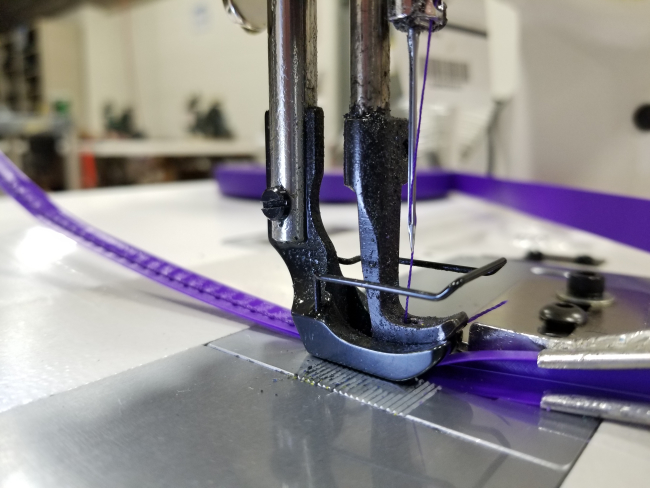
A stitched job ticket holder, sometimes called a sewn holder, is assembled with thread and edge-binding tape. The binding wraps around the outside edges, and an industrial sewing machine joins the layers together.
This construction works well for holders that are moved between departments, hung from equipment, handled throughout the day, or reused over an extended period.
Advantages of stitched construction include:
- Durable construction for frequent handling and repeated use
- Binding tape that reinforces and protects the outside edges
- More rigid clear panels on applicable styles to help keep paperwork flat
- A broad selection of binding colors for workflow identification
- Strong metal-eyelet hanging options
- Greater flexibility for non-standard sizes and smaller custom quantities
Stitched holders normally cost more initially than comparable heat-welded holders. In applications with constant handling, their reinforced construction may reduce replacement frequency and lower the cost over time.
View stitched job ticket holders.
What Is a Heat-Welded Job Ticket Holder?
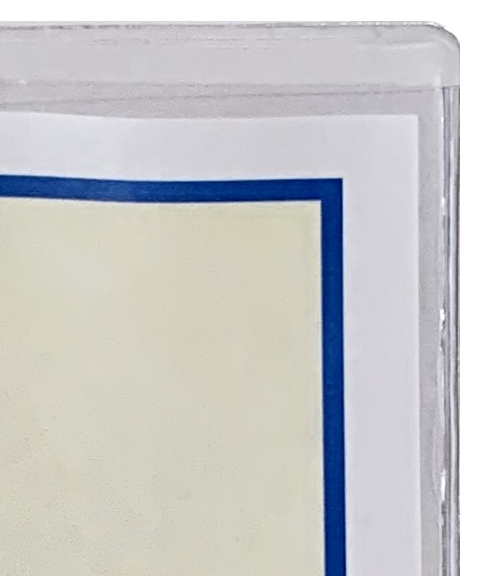
A heat-welded job ticket holder, also called a heat-sealed holder, is made by fusing vinyl layers with a heated press or ultrasonic welding equipment. The process creates a thin sealed seam without thread or binding tape.
Heat-welded construction is often selected when buyers need an economical standard-size holder, a thinner finished edge, improved sealed-edge moisture resistance, or a larger order quantity.
Advantages of heat-welded construction include:
- Lower initial cost in many standard configurations
- Thin seams that reduce the holder’s finished outside dimensions
- A wide selection of standard sizes made with existing tooling
- Better resistance to moisture entering through the welded edges
- Tinted vinyl and colored-tab options for workflow identification
- Press-lock and enclosed styles for additional document protection
The thinner edge can be especially useful when holders must fit inside file drawers, storage boxes, bins, or other spaces where overall dimensions matter.
View heat-welded job ticket holders.
Are Heat-Welded Holders Waterproof?
Heat-welded seams can reduce the amount of water entering through the edges, but the welded construction alone does not make every holder waterproof.
Water can still enter through an open top or side. A flap or press-lock closure provides additional protection, while a fully enclosed design provides more complete protection.
When full water protection is required, choose only a holder specifically described as waterproof. In areas with spills, outdoor exposure, wash-down conditions, or heavy moisture, review the opening and closure just as carefully as the edge construction.
See Waterproof vs. Water-Resistant Job Ticket Holders for a more detailed explanation.
Which Construction Lasts Longer?
For frequent handling and demanding workplace use, a well-made stitched holder will generally last longer than a basic heat-welded holder. The binding reinforces the outside edges, which often receive the most wear.
Construction is only one factor. Service life also depends on vinyl thickness, document weight, mounting method, working conditions, frequency of use, and how the holder is handled. A lightly used heat-welded holder may remain in service for years, while any holder can wear quickly in a severe application.
See Useful Life of Job Ticket Holders for additional factors that affect durability.
Which Is More Economical?
Heat-welded holders generally have the lower purchase price. They can be a practical choice for lighter-duty applications, large facility rollouts, short-term projects, and locations where the holders are not handled continuously.
Stitched holders usually cost more at the time of purchase but may provide better long-term value when frequent use would cause lighter holders to require regular replacement.
Compare more than the unit price. Expected service life, replacement frequency, required document protection, and the cost of lost or damaged paperwork can all affect the actual cost of the holder.
Color-Coding Options
Both constructions can support a color-coded workflow, although they use different identification methods.
- Stitched holders can use colored binding around the outside edges. The color remains visible from several directions when holders are stacked, carried, or hung together.
- Heat-welded holders may use tinted vinyl, colored top tabs, or other identification features based on the product design.
Color coding can identify departments, priority levels, process stages, product groups, inspection status, or other workflow categories.
See Color-Coding Options for Job Ticket Holders for more information.
Mounting and Hanging Options
Both stitched and heat-welded holders can be produced with mounting or hanging features. Available options may include:
- Metal eyelets
- Reinforced hang holes
- Molded hang holes
- Magnetic backing
- Self-adhesive backing
- Hook-and-loop attachment
- Hanging straps
- Plain, unmounted configurations
Select the mounting method separately from the edge construction. A stitched holder is not automatically required for every hanging application, and a heat-welded holder does not have to remain stationary.
See Job Ticket Holder Mounting and Attachment Options.
Cleaning Stitched and Heat-Welded Holders
Most vinyl job ticket holders can be cleaned with a soft cloth and a mild cleaning solution. Avoid abrasive pads and strong solvents unless the product instructions specifically permit them. Harsh cleaners may cloud the clear vinyl, damage printed areas, weaken adhesive, or affect other components.
Allow the holder to dry before inserting paperwork, especially when it has an open top or side rather than a sealed closure.
Questions to Help You Choose
Use the following questions to determine which construction is the better fit:
- How often will the holder be handled or moved?
- Is it expected to remain in service for months or years?
- Will it be exposed to dirt, grease, moisture, spills, or outdoor conditions?
- Does the document need basic water resistance or a waterproof enclosure?
- Would colored binding, tinted vinyl, or identification tabs improve the workflow?
- Must the holder fit inside a drawer, box, bin, or other limited space?
- Will it hold one sheet or a thicker packet of documents?
- Does it require eyelets, magnets, adhesive, straps, or another attachment?
- Will a standard size work, or is custom sizing required?
- Is the primary concern initial price or long-term replacement cost?
Which Job Ticket Holder Should I Choose?
Choose a stitched job ticket holder when frequent handling, reinforced edges, rigid paper support, strong eyelets, color-coded binding, or low-quantity custom sizing is important.
Choose a heat-welded job ticket holder when lower initial cost, thin seams, standard-size availability, lighter-duty use, or improved sealed-edge moisture protection is the priority.
For help matching a holder to your document, use our Product Size Selector Assistant. For special sizes, mounting requirements, colors, closures, or pocket configurations, visit our Custom Design Request Page.
For additional help, call 800-238-3957, email Sales@dakonteproducts.com, or use our Contact Form.